

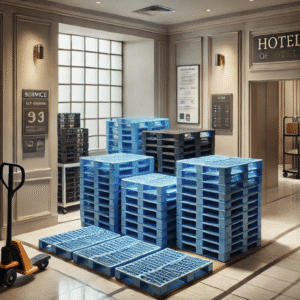
In today’s competitive hospitality landscape, efficiency and hygiene are everything. Hotels are rethinking their operations from the ground up—literally. One of the most unexpected yet impactful changes? The switch from wooden pallets to plastic pallets.
This shift isn’t just about modernization—it’s driven by measurable results. Hotels are turning to plastic pallets to boost hygiene, improve operational efficiency, reduce workplace injuries, and meet sustainability goals. With longer lifespans and lower maintenance, plastic pallets have become an unsung hero of the hotel industry.
Let’s dive into the reasons behind this trend—and why your hotel might want to follow suit. 💡
Logistics & Efficiency: Streamlining Hotel Supply Chains 🛎️🚚
Durability & Longevity
Unlike wooden pallets, plastic pallets don’t crack, warp, or splinter. They’re built to last—and in a hotel environment that’s always in motion, this matters.
According to LinkedIn, plastic pallets can last up to 10 times longer than wooden pallets, reducing the frequency of replacements and minimizing operational interruptions.
Uniformity & Compatibility
Plastic pallets are manufactured with precision, which means consistent size and shape—ideal for stacking linens, guest amenities, or bulk deliveries. Consistency also means they’re easier to move through conveyor belts, elevators, and tight storage spaces.
Rehrig Pacific notes that this uniformity helps eliminate problems with jams and misalignments in automated systems.
Lightweight & Maneuverable
Plastic pallets are up to 35% lighter than wood, according to iGPS Logistics. That’s a win-win for both fuel efficiency and your employees’ backs. Easier to lift and move means faster workflows and fewer injuries.
Hygiene & Sanitation: Keeping Guests Safe and Satisfied 🧼🛁
Non-Porous and Easy to Clean
Plastic doesn’t absorb liquids like wood does. Spills and messes? A quick spray-down, and it’s good to go. That’s a huge plus in food service areas, spas, or anywhere sanitation is a top priority.
According to Naeco, “plastic pallets are waterproof, resistant to bacteria, and much easier to clean.”
Reduced Risk of Mold, Bacteria & Contamination
Wooden pallets can harbor bacteria and fungi, posing a risk in kitchens, banquet storage areas, and other high-moisture environments.
Tosca explains how plastic pallets are naturally resistant to mold, fungi, and pest infestations—making them ideal for the hotel industry’s sanitation needs.
Health Code Compliance Made Easier
Whether you’re preparing food, storing linens, or receiving bulk toiletries, cleanliness matters. Plastic pallets help hotels meet local health and safety regulations with confidence. FDA guidelines recommend the use of non-absorbent, cleanable materials for food-contact surfaces—which plastic offers by design.
Workplace Safety & Ergonomics: Protecting Your Team ⚠️👷
No Splinters, Nails, or Cracks
Wooden pallets come with hidden hazards: splinters, rusted nails, and jagged corners. Plastic eliminates these risks. A smoother surface means fewer cuts, bruises, and snagged uniforms for your team.
The Occupational Safety and Health Administration (OSHA) emphasizes the importance of safe handling materials in reducing workplace injuries—and plastic pallets fit the bill.
Ergonomic Design = Happier Teams
Plastic pallets are lighter and easier to maneuver, improving worker ergonomics and reducing fatigue. Employees can move them without needing a full-body workout or risking back injury.
Hotels with frequent room turnover or large event venues benefit greatly from this ease of movement.
Sustainability & Eco-Friendliness: Leading the Green Movement 🌍🌱
100% Recyclable and Reusable
Many plastic pallets are made from recycled materials and are fully recyclable at the end of their long life. Tosca explains how plastic pallets contribute to a closed-loop recycling system—supporting sustainability without sacrificing performance.
Reduced Carbon Footprint
Lighter weight = less fuel consumption during transport. According to iGPS, companies using plastic pallets save millions of pounds of carbon emissions annually.
Hotels committed to eco-certifications or green initiatives can boost their environmental scores just by switching pallets.
No Trees Harmed
Every wooden pallet requires lumber—typically from hardwood trees. Plastic pallets help hotels do their part in reducing deforestation while promoting more sustainable materials.
Financial Benefits: The ROI of Plastic Pallets 💰📈
Longer Life = Lower Long-Term Costs
Yes, plastic pallets cost more upfront. But over time, they win. According to FALM, plastic pallets offer a far lower total cost of ownership (TCO) thanks to their durability, cleanliness, and reusability.
Fewer Injuries = Fewer Claims
Safer pallets mean fewer worker’s comp claims, sick days, and medical costs. The ROI isn’t just financial—it’s human. A safer workplace also leads to better morale and higher retention.
Fewer Damaged Goods
Plastic pallets resist impact and moisture better than wood. Your boxed towels, linens, food orders, or cleaning supplies arrive intact—not damaged by a soggy or broken pallet.
Real Hotel Scenarios: Where Plastic Pallets Shine ✨
Housekeeping Supply Chains
Hotels often receive bulk deliveries of towels, sheets, robes, and toiletries. Plastic pallets ensure those supplies stay dry, clean, and undamaged in transit or storage—even in humid basement storage rooms.
Food & Beverage Operations
Kitchen staff deal with perishables, frozen food, and heavy beverage cases. Plastic pallets are easier to sanitize and won’t harbor mold or bacteria, unlike wood. A must for maintaining guest food safety.
Event Management & Banquets
Hotels hosting large conferences or weddings often manage high volumes of inventory on short notice. Plastic pallets are uniform, easy to roll, and stack well—essential for banquet chairs, decor, and AV equipment.
Common Objections to Plastic Pallets—Debunked ❌
“They’re too expensive.”
While the initial price is higher, plastic pallets often last 10 years or more, while wood may need replacing every 1-2 years. The total lifetime cost is significantly lower.
“What if they break?”
Many plastic pallets are part of pallet pooling programs where damaged units are swapped out—no extra cost to you. Look for vendors that offer this feature.
“Aren’t they bad for the environment?”
Not at all! Many plastic pallets are made from recycled content and are fully recyclable again at the end of their lifecycle. In fact, they’re often better for the environment than wood, thanks to longer use and lower emissions.
Making the Switch: What to Look for in a Supplier 🧾
Before jumping in, ask your supplier:
✅ Are the pallets made from FDA-compliant or food-grade plastic?
✅ Are they recyclable or made from recycled materials?
✅ Do they offer pooling or leasing options?
✅ Can they be used with forklifts, pallet jacks, and conveyors?
✅ What’s the expected lifespan and warranty?
For best results, choose a supplier that understands hospitality needs and can scale with your hotel’s demands.
Conclusion: Time to Upgrade Your Hotel Operations 🛎️📦
Plastic pallets near me are far more than just a trend—they’re a tool for efficiency, safety, and sustainability in the hotel industry. From streamlining logistics to improving sanitation and reducing injuries, these modern solutions deliver across every operational area.
Whether you manage a boutique property or a full-service resort, plastic pallets can help you:
✔️ Reduce long-term costs
✔️ Improve guest satisfaction through cleaner operations
✔️ Meet green initiatives
✔️ Create a safer workplace
✔️ Enhance storage and delivery systems
It’s time to step away from splinters and soggy wood—and invest in smart, clean, and sustainable solutions.
👉 Your guests expect the best. Shouldn’t your back-of-house operations reflect that too?