

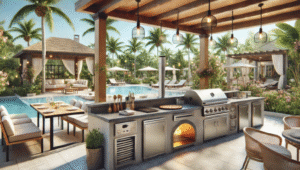
If you’re looking for one upgrade that delights guests, differentiates your property, and powers profitable, year-round programming, build (or reimagine) an outdoor kitchen. Today’s travelers crave sensory, social, and story-rich experiences; hotels that bring the sizzle of live fire, chef interaction, and fresh air into the guest journey are winning attention and incremental revenue. And in a climate of rising operating costs and flattening topline growth, outdoor kitchens don’t just look great on Instagram—they can work hard on your P&L when thoughtfully planned. AHLA
Why Outdoor Kitchens Fit the 2025 Hotel Guest 🍽️
Experiential dining has moved from “nice to have” to expectation. Guests want local flavors, authentic techniques, and spaces that encourage connection. An outdoor kitchen ticks all three: it’s a stage for regional ingredients, a canvas for wood-fired or plancha cooking, and a natural mixer that keeps conversations flowing. Industry outlooks also point to continued competition for discretionary spend, which puts a premium on high-impact amenities that create memorable, bookable moments—from chef’s table tastings to sunset cookouts. Hospitality NetHospitality Insights
A Revenue Engine Hiding in Plain Air 📈
The most persuasive case for an outdoor kitchen is financial. Hotels are embracing “total revenue management,” optimizing not only rooms, but F&B, events, and ancillary sales. Outdoor culinary programming expands dayparts (brunch, golden-hour small plates, late-night bites), increases average checks through theatre and premium add-ons, and unlocks private experiences you can pre-sell in packages. Strategically, that’s exactly where the industry is heading: holistic revenue strategies that elevate profit per guest, not just RevPAR. Cornell SC Johnson
Labor is still a pressure point across hospitality, especially in F&B. The right outdoor setup—streamlined menus, partial mise en place in a back kitchen, and equipment that reduces hands-on steps—can reduce friction while supporting revenue-dense service periods such as banquets and activations. Data show F&B labor has been a major cost growth driver; efficient layouts and targeted programming help you capture revenue without bloated staffing models. STR
Activate Underused Space and Extend Your Dayparts 🌅
Many properties have patios, rooftops, courtyards, or pool decks that sit idle outside peak hours. An outdoor kitchen turns those square feet into a flexible, income-producing venue:
-
Breakfast-to-Brunch: Griddle-top stations for pancakes and chilaquiles; juice presses highlighting local produce.
-
Afternoon Appeal: Poolside skewer bars, flatbread ovens, or ceviche carts to keep guests on property.
-
Golden Hour & Late Night: Wood-fired small plates, signature spritzes, and s’mores kits that anchor sunset rituals.
By designing around modularity—rolling trolleys, plug-and-play induction, covered prep—you can adapt to weather and season, balancing á la carte with pre-ticketed events. This kind of “experience calendar” helps flatten shoulder periods while giving marketing a steady drumbeat of promotable moments. Hospitality Net
Give Groups and Weddings Something to Talk About 💍🎉
Meeting planners and wedding parties want venues that photograph beautifully and feel bespoke. An outdoor kitchen turns a standard reception into an immersive culinary story: oyster shucking bars, live paella pans, or a chef carving station framed by string lights. Because these are highly visible services, they justify premium pricing and can be bundled with beverage stations, mixology classes, or chef meet-and-greets. As banquet and catering revenue continues to be a bright spot, leaning into outdoor culinary theatre helps you capture more share of wallet from groups already on site. STR
Design That Works: From Fire to Flow 🔧
A great outdoor kitchen blends drama with discipline. Consider:
-
Zoning & Flow: Separate hot line (grill/oven/plancha), cold finishing (garde manger), plating, and a discreet service lane. This avoids cross-traffic and keeps guests focused on the show, not the logistics.
-
Heat & Smoke Management: Wood- or charcoal-fired elements are a draw; pair them with proper hoods or open-air placement that respects neighbors and guestrooms.
-
Menu Engineering: Choose techniques that shine outdoors—flatbreads, skewers, whole fish, vegetables over embers—and minimize à la minute complexity.
-
Weather Resilience: Shade sails, wind screens, radiant heaters, and ceiling fans extend your season and improve guest comfort.
-
Beverage First: Profits often flow from drinks. Build dedicated bars with draft lines, batched signatures, and thoughtful N/A options for wellness-minded travelers.
-
Accessibility & Safety: Clear paths, non-slip surfaces, and ADA-compliant counters ensure inclusive, incident-free service.
These choices support the broader trend of wellness-forward, indoor-outdoor renovations that meet modern traveler expectations. Hospitality Net
Marketing Magnetism You Can Taste 📸
Outdoor kitchens naturally generate content: the glow of coals, the flare of a pan, the steam swirl off a just-grilled peach. That’s effortless storytelling for social, email, and PR. You can theme weekly activations—“Fired-Up Fridays,” “Coastal Skewer Social,” “Garden to Grill”—and push them to your owned channels and OTA profiles. Properties featured in “best new hotel” roundups consistently highlight distinctive F&B and scene-setting outdoor spaces, underscoring how culinary identity drives editorial coverage and traveler consideration. Travel + Leisure
Proof in the Headlines: Hotels Leaning Food-Forward & Open-Air 🧑🍳
Recent hotel news showcases brands betting on outdoor, chef-driven spaces—from rooftop bars with seasonal menus to properties built around wood-fired concepts and expansive courtyards. These stories reflect a simple truth: when culinary craft meets open air, guests feel they’re part of something special, not just eating a meal. Eater SFLivingetc
Build the Business Case (and Win Ownership Buy-In) 💼
When presenting an outdoor kitchen to ownership or asset managers, frame it in total-hotel terms:
-
Incremental Revenue: Model capture rates for in-house guests plus local demand. Layer in event premiums for weddings, buyouts, and tastings. Use conservative checks and show sensitivity to weather.
-
Programming Calendar: Map 52 weeks of activations—seasonal menus, chef collabs, live-fire classes—and the marketing reach of each (UGC potential, PR hooks, and community partnerships).
-
Cost Controls: Highlight menu engineering for contribution margin (high flavor, lean labor), and bar programs designed for speed.
-
Cross-Selling: Package with rooms (romance, wellness), spa (post-sauna grill plates), or activities (garden tours → grill).
-
KPIs Beyond F&B: Track uplift in length of stay, review scores referencing F&B, and group conversion when outdoor culinary experiences are included.
This approach aligns with the industry’s pivot toward managing all revenue streams strategically, not just rooms. Cornell SC Johnson
Practical First Steps (Next 90 Days) 🗓️
-
Audit Your Space: Identify patios, rooftops, pool decks, or lawns with service access and minimal noise transfer to rooms.
-
Pilot the Menu: Start with a weekend pop-up cart or mobile grill to test demand, flow, and staffing.
-
Invest Where It Counts: Durable equipment (plancha, pizza/flatbread oven, combi support inside), cold storage nearby, and a compact bar with draft/batched capability.
-
Train for Theatre: Coach chefs and servers on guest engagement—explain origins, techniques, and pairings. Small stories create big value.
-
Market the Moment: Promote sunset seatings, limited tickets, and chef collaborations across social and local media; invite micro-influencers to preview.
As macro conditions remain mixed—costs up, growth uneven—turning underused outdoor square footage into a guest-loved, revenue-positive venue is a practical, brand-building win. AHLASTR
Conclusion
An outdoor kitchen is more than a pretty patio. It’s a flexible stage for culinary craft, a magnet for weddings and locals, a marketer’s dream, and a smart lever for total-hotel profitability. Design it for efficiency and theatre, program it with heart and rhythm, and it will reward your property with unforgettable evenings, stronger reviews, and a healthier bottom line. The future of hotel differentiation is experiential, social, and—increasingly—open air. Fire it up. 🍷🌇
Helpful hotel-industry reads & references (authority links)
-
American Hotel & Lodging Association: 2025 State of the Industry overview. AHLA
-
STR: F&B labor costs and banquet/catering revenue dynamics in 2024. STR
-
Cornell Center for Hospitality Research: Total Hotel Revenue Management. Cornell SC Johnson
-
Hospitality Net: Trends highlighting culinary and experience-driven amenities. Hospitality Net
-
EHL Hospitality Insights: 2025 statistics & demand outlook. Hospitality Insights